

China's port construction has fully stepped into the world's first-class level, with throughput ranking first in the world for many consecutive years, and has become a core hub supporting China's high-quality economic development and global trade. Behind this lies a multifaceted significance and effort:
I. Global leadership in scale and efficiency
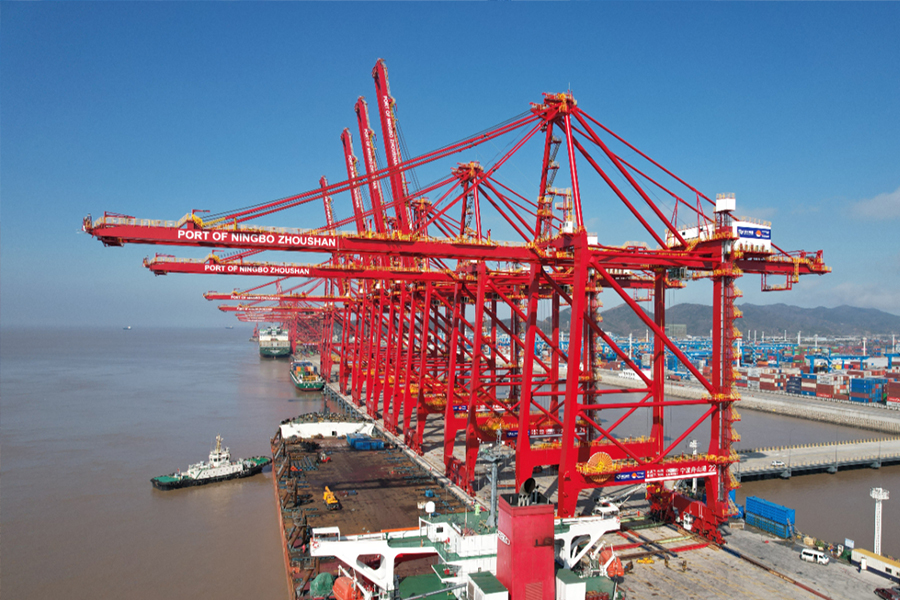
In 2024, China’s total port cargo throughput reached 17.6 billion metric tons, and container throughput reached 330 million TEUs, both ranking first in the world. Among the world’s top ten ports by cargo and container throughput, China accounts for eight and six spots, respectively. The Port of Shanghai set a new global record with a container throughput of 51.5 million TEUs, becoming the first “50-million-TEU-class” superport; Meanwhile, the Port of Ningbo-Zhoushan retained its position as the world’s top port for the 16th consecutive year with a cargo throughput of 1.377 billion metric tons, while its container throughput of 39.3 million TEUs marked a year-over-year increase of 11%—the highest growth rate in nearly seven years. This scale advantage is not only reflected in volume but also in a qualitative leap achieved through efficiency gains: Chinese ports handled an average of 38,000 TEUs per hour, with a direct berthing rate of 89%; the average waiting time at anchorages was reduced to 19 hours, placing their operational efficiency among the world’s best.

II. Breakthroughs in infrastructure and technological innovation
China has formed world-class port clusters around the Bohai Sea, Yangtze River Delta, Guangdong, Hong Kong and Macao Bay Area, and the scale of port infrastructure is the largest in the world. The construction of automated terminals is particularly prominent: Qingdao Port has built the first nationally produced fully autonomous automated terminal, realizing the localization of the whole stack from the electronic control system to the operating system, reducing the equipment turnaround time by 20%, with an annual power generation capacity of more than 320 million kilowatt-hours; Nansha IV of Guangzhou Port pioneered the "Parallel Yard + Intelligent Guide" technology system As of 2024, the number of automated terminals built and under construction in China will rank first in the world, and the intelligent transformation will cover the whole chain of loading and unloading, scheduling and logistics.
III. Pioneering practices in green and smart development
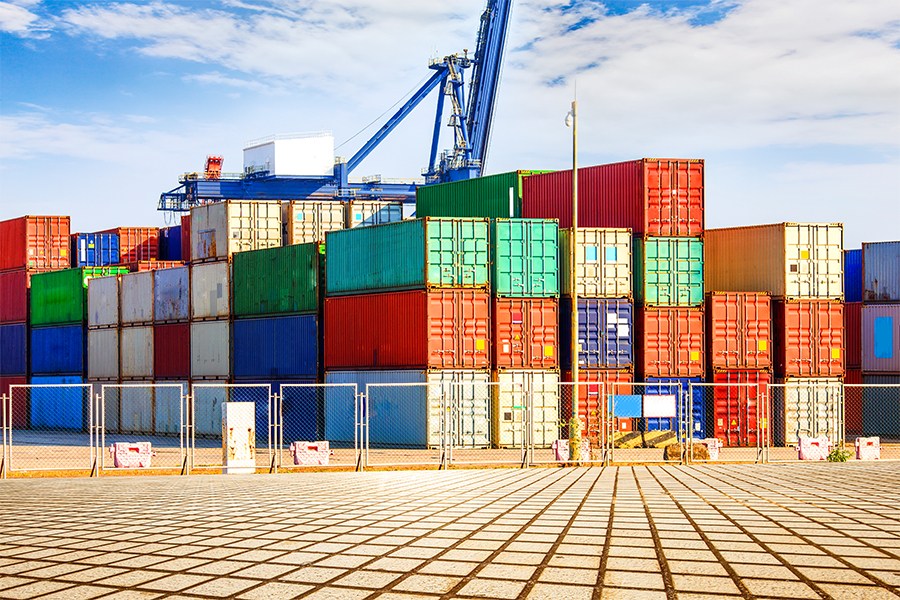
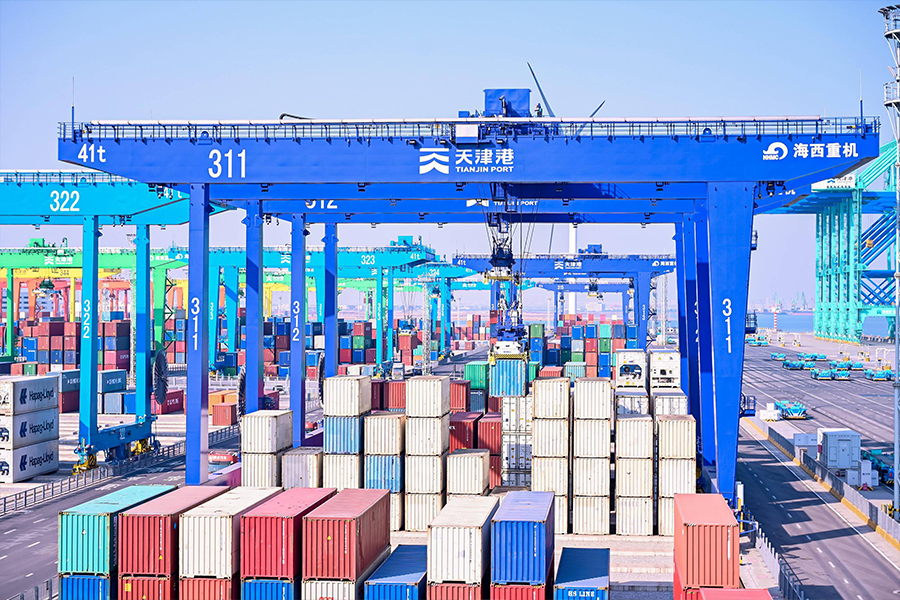
In terms of green transformation, the installed capacity of new energy in Tianjin Port reaches 146.5 MW, with an annual carbon dioxide emission reduction of more than 200,000 tons, and 70% of electricity used in production comes from clean energy; Meishan Port Area of Ningbo Zhoushan Port and Shenzhen Port accelerate the creation of near-zero carbon ports, and the utilization rate of new energy container trucks and shore power is greatly increased. In the process of intellectualization, Shanghai Port has integrated 5G and artificial intelligence technology to build an intelligent operation and control system, and Ningbo Zhoushan Port has built the largest 5G gantry crane cluster in China, realizing the digital management of the whole process. These innovations have enabled China's ports to occupy the top three positions in UNCTAD's Port Liner Shipping Connectivity Index (PLSCI).
IV. Regional synergies and global radiation
The Yangtze River Delta port group has formed a complementary pattern of "seaport + river port" through the linkage of the north and south wings of Shanghai Port and Ningbo Zhoushan Port. Ningbo Zhoushan Port has an intermodal transportation volume of more than 1.8 million TEUs, and its scheduled trains cover 67 cities in 16 provinces, making it a shortcut for inland foreign trade enterprises to go to the sea. The Pearl River Delta, Bohai Rim and other port clusters are relying on the FTZ policy to promote the digitization of shipping and trade. In 2024, the container throughput of Guangdong ports will exceed 77 million TEUs, and the annual volume of Tianjin port's China-European liner "Jin-Europe" line will exceed 100,000 TEUs. This synergistic effect makes China's port cluster rank first in the comprehensive evaluation of global port clusters by Xinhua Index Research Institute, and its comprehensive service capacity is comparable to that of international port clusters such as New York and Tokyo Bay.
V. Strategic support and future direction
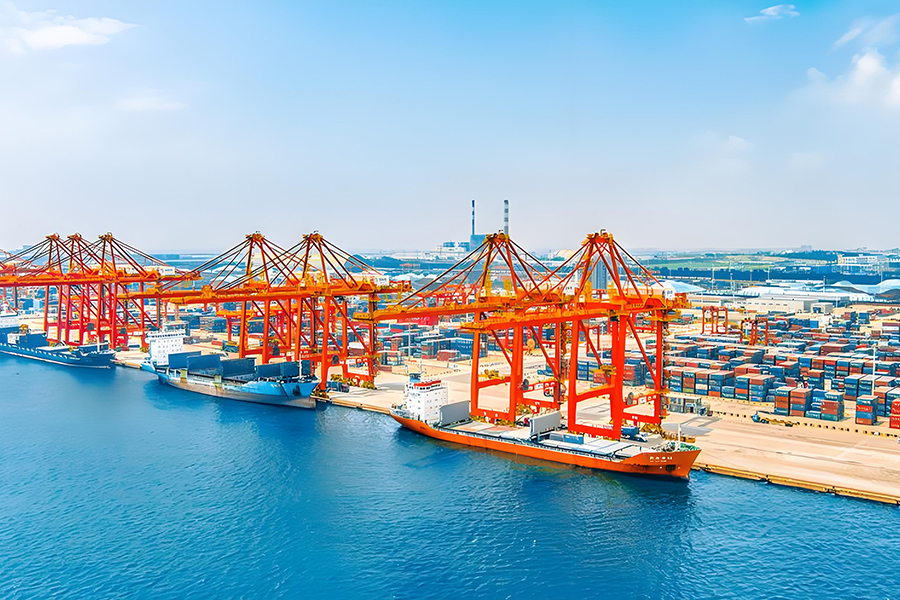
Port construction is an important fulcrum of the new development pattern of the "double cycle". 2024, China's foreign trade maritime transportation accounted for more than 30% of the world, the port as an "economic barometer", directly supporting the new energy vehicles, lithium batteries and other " new three" explosive growth in exports. New Three Things" explosive growth in exports. In the future, China will adhere to the three major paths of integrated development (perfecting the multimodal transportation system), innovative development (deepening the wisdom and green technology), and safe development (strengthening the essential safety), with the goal of building a world-class port system that is safe, convenient, wise and green, economically efficient, and strongly supported by 2035.
Behind this series of achievements is the scientific leadership of the "14th Five-Year Plan", the demand-driven mega-market, and the development mode of "port, industry and city" deep integration. As shown by Ningbo Zhoushan Port through the "physical layer - digital layer - ecological layer" three-level upgrading, China's ports are shifting from the "scale dividend" to the "efficiency dividend", and are becoming more and more important in the global value chain. Efficiency dividend", in the global value chain continues to climb.

 Chinese
  English
  Japanese
  Korean
  Indonesian
  German