

The global pet economy is undergoing a historic transformation. According to industry forecasts, the global pet market will exceed $380 billion in 2025, with smart technology-driven innovative products becoming the core growth pole. Chinese brands are rewriting the global competitive landscape by transforming and innovating as OEMs - Xiaopei's smart cat litter box has captured 35% market share in the U.S., Homan's medical drying box has opened up the high-end market, and Pidan's cyberpunk-style ads have been viewed 200 million times on TikTok, demonstrating the transition from "Made in China" to "Created in China". Made in China" to "Created in China".
The core driving force of this transformation comes from the deep integration of technology iteration and emotional consumption. AI translator Traini realizes human-pet language interaction, and Goodbaby Group builds the world's first dog and cat digital life library, McFady WarmData, and builds a dual-wheel-drive system of "science and technology + emotion" through more than 300 patents. Intelligent hardware market size is expected to exceed $10 billion in 2025, and the annual growth rate of smart cat litter boxes, automatic feeders and other categories exceeds 200%, becoming the fastest-growing segment. 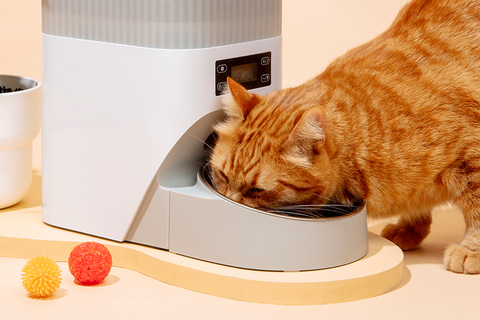

One,Generation Z dominates consumer upgrading: the leap from functional needs to emotional value
Generation Z, the main force behind pet ownership, is reshaping market dynamics. They view pets as “family members,” driving the smart pet products market to expand at an annual growth rate of 19.5%, with a projected valuation of $5.9 billion in 2024 and a subscription service penetration rate of 52%. Data from Douyin E-commerce shows that Gen Z accounts for over 60% of smart product consumption, with sales of categories such as litter boxes and cameras growing by 131.7% year-over-year.
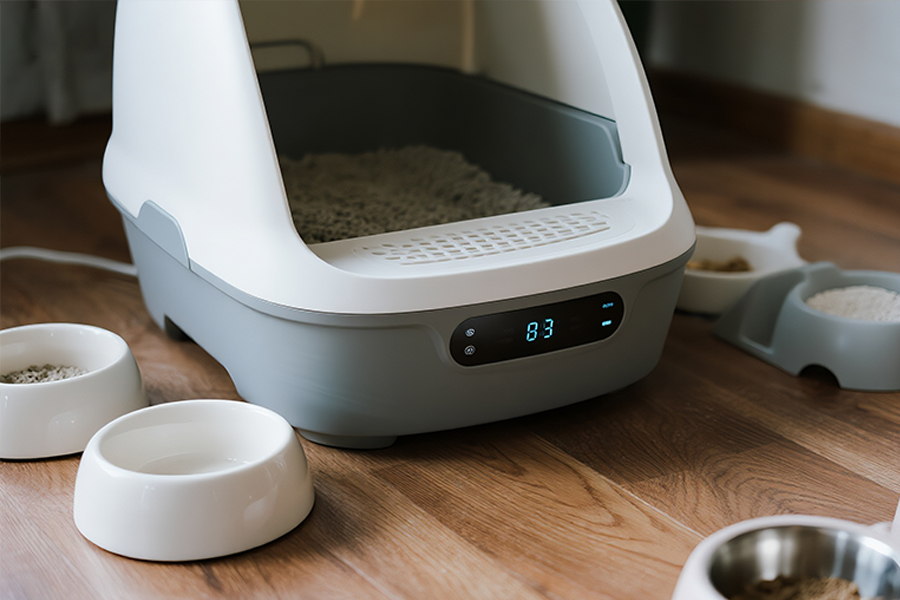
This kind of consumption upgrade is reflected in the outbreak of scenario-based demand: smart cat toilets need to support multi-cat recognition and health monitoring (such as Xiao Pei MAX PRO's AI camera and data warning), smart feeders require precise quantity control and generate diet reports, and pet treadmills have become the "fitness necessity" for urban pets. What's more noteworthy is that Generation Z is willing to pay more than 30% for the emotional premium. For example, Ropet, an AI pet, simulates real companionship through multi-sensory interaction and won 11,000 orders from European and American markets during the pre-sale period.
Two,Regional market differentiation: Europe and the United States high-end and Asia-Pacific high-growth coexistence
The global market is characterized by significant regional differences. The European and American markets focused on high-end demand, with the average price of smart collars, smart cat litter boxes and other products exceeding US$200. The new EU regulations require mandatory labeling of pets and prohibit the sale of cats and dogs in pet stores, driving the premium of compliant products to 40%. Chinese brands seized the first opportunity through technical adaptation - Xiaopei smart cat litter box passed the EU electromagnetic radiation certification, and Homan medical drying box obtained CE certification, occupying a share of 27% in the high-end category of Amazon.com. HOMAN medical drying box gets CE certification and takes up 27% share in Amazon's high-end category.
The Asia-Pacific market is showing explosive growth potential. The pet market in six Southeast Asian countries grew at an annual rate of 15%, the scale of pet food in Thailand exceeded 20 billion baht, and the cat litter category in Indonesia grew at an annual rate of 92%. Chinese brands are rapidly penetrating the market based on their supply chain advantages: sales of HOMAN smart cat litter in Southeast Asia grew by 300% year-on-year, and Pidan, through localized design (e.g., deodorizing cat litter for tropical climates), has achieved a market share of over 18% in Vietnam. Pidan's market share in Vietnam through localized design (such as deodorized cat litter for tropical climate) exceeded 18%.
Three,Overseas Challenges and Solutions: Compliance Barriers and Deep Localization
Despite the promising outlook, Chinese brands expanding overseas still face the dual challenges of technical compliance and cultural adaptation. New EU regulations require smart devices to display their battery cycle life, while the U.S. FDA enforces strict certification standards for veterinary medical devices. In Q1 2025, a Chinese brand was fined 800,000 euros by the EU due to a camera security vulnerability. XiaoPei adopted a “preliminary technical research + local certification” strategy, preparing for EU data security standards three years in advance; Hormann, meanwhile, partnered with local distributors to increase the localization rate of its product manuals to 90%.
Four,Future Trends: AI Reconstructs Human-Pet Relationships, China Defines Industry Standards
Technological innovation is driving the evolution of the pet economy towards whole-life health management: AI models can analyze pet behavioral data in real time, and the 4.0 version of Petsmart's system achieves a disease warning accuracy of more than 90%. Flexible electronic technology has given rise to smart collars that can monitor heart rate and blood pressure, and an electronic guide dog developed by Shenyang University of Technology has entered the testing phase at a senior living institution.
Chinese brands are shifting from exporting products to setting standards. Guaibao Group is leading the development of the “Nutritional Standards for Smart Pet Food,” while Xiaopei is participating in the drafting of the “Safety Specifications for Smart Pet Devices.” These efforts will reshape the global industry’s narrative. As predicted by iResearch, China’s pet tech consumer goods market will maintain an annual growth rate of 25% from 2025 to 2030, becoming a global hub for innovation.

This industrial revolution driven by intelligent technology is not only a tug-of-war of commercial competition, but also an epitome of the evolution of the relationship between humans and pets. When the AI algorithm reads the emotions of pets, and when smart devices guard life and health, Chinese brands are writing a new chapter in the $380 billion market with innovative strength.

 Chinese
 English