

Apparel AQL inspection is used to evaluate garment quality before shipment through standardized sampling and defect classification. During an apparel inspection, inspectors check workmanship, measurements, stitching, fabric defects, labeling, packaging, and other quality requirements based on the agreed AQL level. Critical, Major, and Minor defects are recorded separately to determine whether the production lot should be accepted, reworked, or rejected.
For bulk garment orders, AQL sampling provides a practical way to evaluate overall production quality without inspecting every piece. The inspection results help buyers understand defect levels, identify recurring quality problems, and make shipment decisions before goods leave the factory.
Many foreign trade companies think that “small problems do not affect sales”, but in reality:
An insignificant color difference may cause the whole shipment to be rejected by overseas supermarkets.
A loose button can lead to children's clothing safety complaints and huge fines
An uncleaned thread may directly lower the grade of the brand in the minds of consumers
Professional third partyGarment inspection...means identifying and addressing these defects at the factory before the goods are shipped. This article will provide a detailed breakdown of the 12 most common types of defects found during apparel inspections, along with the corresponding AQL sampling criteria, to help international trade professionals mitigate quality risks at the source.
I. Appearance defects (6 categories): the most intuitive and most likely to trigger the return of the problem
Appearance defects are the first thing customers notice when they receive the goods and are the type of defects with the highest return rate.
- aberration
The color of the left and right pieces, front and back pieces of the same dress is not consistent; there are obvious color differences between different dresses of the same batch; the color of the big goods does not match with the confirmation sample.
Causes: unstable dyeing process, mixing of different batches of fabrics, inconsistent drying temperature.
Points for determination: In the standard light source box (D65 light source), observed at a distance of 60cm, the color difference visible to the naked eye is unqualified.
Risk level: Major deficiency (Major)
- a hole
Holes of varying sizes appear in the fabric, including weaving tears, cutting tears, and sewing tears.
Points of Judgment:
Holes ≥ 0.5 cm in diameter, regardless of location, are considered serious defects.
Holes < 0.5cm in diameter, in visible locations (front chest, neckline) are major defects, in hidden locations (underarms, inner hem) are minor defects.
Risk level: Critical / Major
- jumper
Stitch interruptions that occur during sewing, including single-needle skipped stitches, continuous skipped stitches, and skipped stitches.
Points of Judgment:
Continuous jumpers ≥ 3 stitches, regardless of location are major defects
Single-needle jumper, secondary defect in obvious locations, acceptable in hidden locations
Risk level: Major defects / Minor defects

- stains
Oil, water, dye and dust stains that appear on the fabric.
Points of Judgment:
Stains ≥ 1 cm², regardless of location, are considered major defects.
Stains < 1cm² in size, minor defects in visible locations, acceptable in hidden locations
Risk level: Major defects / Minor defects
- Dimensional deviations
The critical dimensions of the garment, such as bust, waist, garment length, sleeve length, etc., do not match the requirements of the work order.
Points of Judgment:
Deviations of critical dimensions exceeding ±1.5 cm are considered major defects.
Critical dimensions deviation between ±1cm~±1.5cm are minor defects.
The key dimensions are qualified if the deviation is within ±1cm.
Risk level: Major defects / Minor defects
- Accessories issues (zippers / buttons)
The zipper does not close smoothly, the zipper head falls off, the button is loose, the button position is shifted, the color of the accessories does not match the fabric.
Points of Judgment:
The zipper does not close and the buttons fall off, which is a major defect.
Poor zipper closure and loose buttons are minor defects
Risk level: Major defects / Minor defects
Process defects (4 categories): core indicators reflecting the production management level of the plant
Workmanship defects, although not as intuitive as cosmetic defects, have a direct impact on the wear life and experience of the garment, and are an important measure of a factory's production capacity.
- poorly sewn
Stitches not straight, uneven stitch spacing, missed seams, open stitches, uneven hemming, double track lines not aligned.
Points of Judgment:
Open threads and leaky seams are the main defects
Stitches that are not straight and unevenly spaced by more than ±1 stitch/cm are minor defects.
Risk level: Major defects / Minor defects
- Too many threads
A large number of uncleaned threads remain on the surface of the garment, including topstitching threads, bottomstitching threads and decorative threads.
Points of Judgment:
If the number of threads per garment exceeds 5, or the length of a single thread exceeds 3cm, it is a minor defect.
Children's clothing with more than 3 threads, or a single thread longer than 1cm, is a major defect (risk of entanglement)
Risk level: Minor defects (Minor) / Major defects (Major, children's clothing)

- poor ironing
There are visible creases, ironing yellow, ironing burnt, aurora marks, ironing watermarks on the surface of the garment.
Points of Judgment:
Yellowing and scorching as major defects
Visible folds, aurora marks, are secondary defects
Risk level: Major defects / Minor defects
- packaging error
Wrong size, wrong color, missing hangtags, missing wash labels, wrong information on hangtags, packaging quantity discrepancies.
Points of Judgment:
Mis-coding, wrong color, and leakage, as major defects
Incorrect hangtag information and irregular packaging are minor defects
Risk level: Major defects / Minor defects
III. Safety deficiencies (category 2): red lines that must not be touched
Safety defects are the most serious category of all defects, especially for children's clothing products. Once a safety problem occurs, it will not only lead to the destruction of the whole batch of goods, but also may lead to legal action and brand crisis.
- Sharp object residue
Sharp objects such as broken needles, metal fragments, scissor tips, burrs, etc. are left in the garment.
Point of decision: Any sharp object residue, regardless of size and location, is a Critical defect (Critical).
Special Requirements: All garments must be tested by needle testing machine, the sensitivity of needle testing machine should reach 1.2mm iron ball standard.
- Small parts falling off (children's clothing focus)
Buttons, zipper heads, decorative buttons, bows, sequins and other small parts have substandard tensile strength and can easily fall off.
Points of Judgment:
For children's clothing under 3 years old, all small parts must be able to withstand a tensile force of ≥70N for 10 seconds without falling off.
For children's clothing aged 3-14 years, all small parts must be able to withstand a tensile force of ≥50N for 10 seconds without falling off.
Any small part that falls off is a critical defect (Critical)
Risk level: Critical deficiency (Critical)
AQL Judgment Criteria Table for Different Defects
AQL (Acceptable Quality Level) is an internationally recognized sampling standard and the most commonly used basis for quality determination in the foreign trade apparel industry. According to the severity of defects, it is usually divided into three levels, and corresponds to different AQL values.
| defect level | define | Corresponding AQL values | Applicable Scenarios | Rules of Judgement |
| Critical defects (Critical) | Defects that may endanger personal safety or render the product completely unusable | AQL 0 | All clothing products, especially children's clothing | If only 1 serious defect is found, the entire shipment will be rejected. |
| Major defects (Major) | Defects that seriously affect the appearance or function of the product, resulting in a high probability of return by the customer | AQL 2.5 | Middle and high-end clothing, branded clothing, super orders | Sampling number, the number of major defects ≤ passing judgment (Ac), then accept; ≥ failing judgment (Re), then rejected |
| Minor defects (Minor) | Slightly affect the appearance of the product, does not affect the use of the function, the customer generally will not return defects for this reason | AQL 4.0 / AQL 6.5 | General Apparel, Fast Fashion Apparel, Large Goods Sampling | AQL 4.0 for demanding orders, AQL 6.5 for average orders |
Common Sample Size Reference (AQL 2.5/4.0, General Inspection Level II):
Lot of 100-500 units: 80 units sampled
Lot of 501-1200 pieces: 125 pieces sampled
Lot of 1201-3200 units: 200 units sampled
Lot of 3201-10000 pieces: 315 pieces sampled
For bulk apparel orders, a pre-shipment inspection (PSI) can combine AQL sampling with workmanship, measurement, labeling, and packaging checks before goods leave the factory. A detailed inspection report can document defect classifications, AQL results, measurement findings, and corrective actions for the buyer’s final shipment decision.
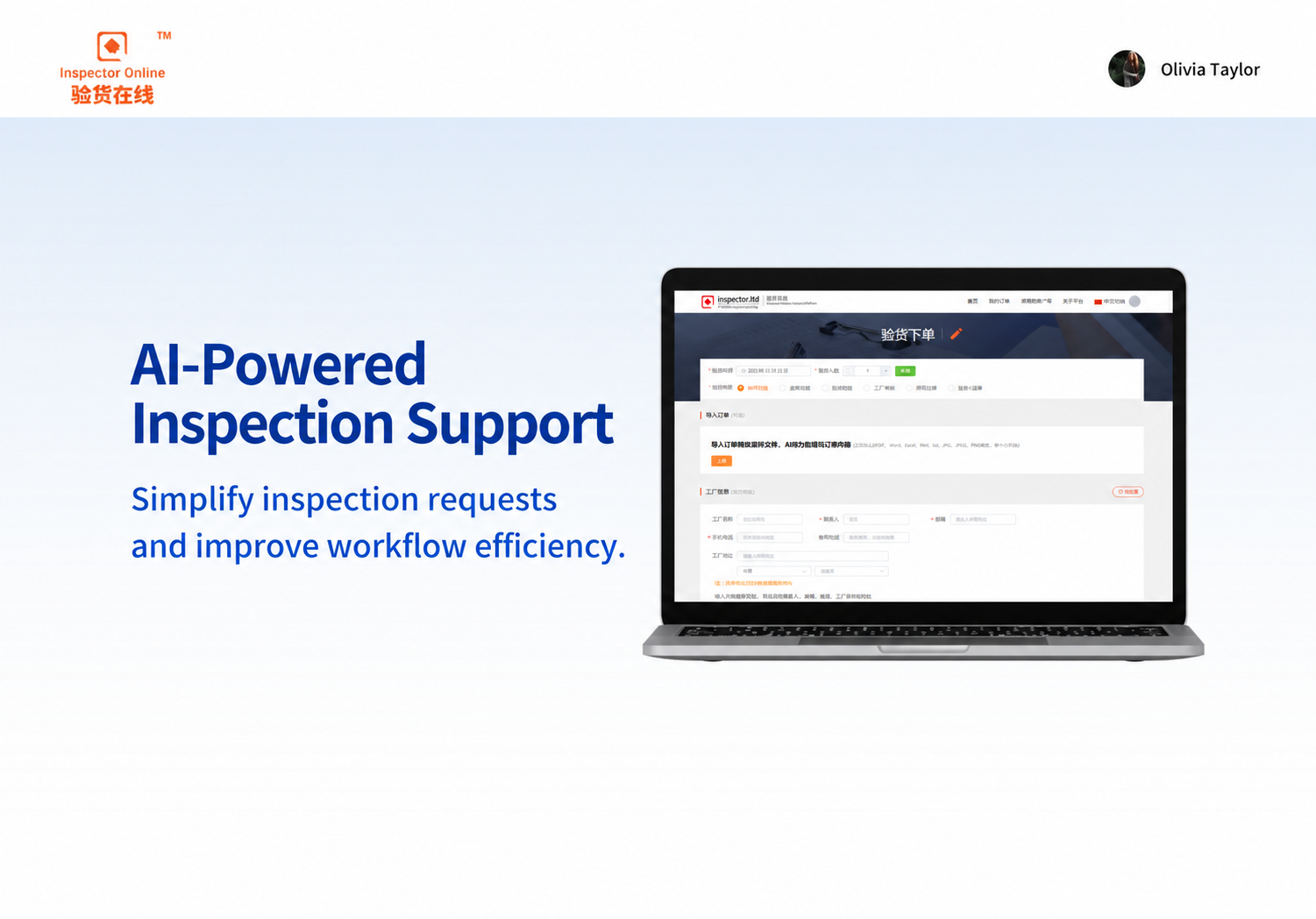
Inspector OnlineRapid solution: 30-minute rapid response for garment-specific inspections, 4-hour delivery of official reports
Apparel orders usually have tight delivery schedules, and once quality problems are found, the time left for factories to rectify the problems is very limited. Traditional third-party inspection companies often need 24-48 hours to issue a formal report, which can easily delay the shipment.
Inspection online clothing specialProduct Inspection ServicesThe company has been built to solve the pain point of “slow inspection and late report” of foreign traders:
- 30-minute response time: Upon receiving an inspection request, we will match you with a local professional apparel inspector within as little as 30 minutes, who can arrive at the factory within as little as 2 hours.
- 4-hour official report delivery: After the inspection is completed, an official Chinese/English report with high-resolution photos, defect statistics and AQL decision results will be issued within 4 hours.
- Total Category Coverage: Proficient in the inspection criteria for all apparel categories such as knit, woven, denim, down, children's wear, lingerie, and more.
- Transparent process: Real-time uploading of photos and videos by the inspectors on-site, and remote viewing of the inspection progress by the head office.
- Professional TeamAll inspectors have more than 5 years of experience in the garment industry and are familiar with the quality standards of the European Union, the United States, Japan and other countries.
If you have a clothing order need inspection, welcome to contact us, we will provide you with professional and reliable third party inspection service in the fastest speed, to help you avoid the quality risk from the source, to avoid the return loss.


 Chinese
  English