

in the global supply chain quality control system.inspectionSampling is a critical step in determining the quality of an entire shipment; its standardization and impartiality directly determine the reliability of inspection results and are key to avoiding trade disputes and safeguarding the rights and interests of both buyers and sellers. As a professional organization independent of both suppliers and buyers, third-party inspection consistently employs scientific and rigorous sampling procedures to address the subjectivity inherent in in-house inspections, andInspector OnlineThe sampling process is more transparent and traceable through digital empowerment. This article combines practical experience, detailed dismantling of the core method of goods inspection and sampling, to help enterprises master the standardized sampling techniques, and build a firm quality line of defense.
If you would like to learn more about the definition of third-party inspection, common services, the basic process, and applicable procurement scenarios, please refer to our Guide to Third-Party Inspection Services guide.
The core principle of sampling inspection is “random, independent, comprehensive and traceable”, the sampling behavior that departs from this principle will lead to the loss of representative samples, which in turn will cause distortion of the inspection results, bringing unnecessary losses to both buyers and sellers. Especially third-party inspection, its core value lies in the independence and impartiality, and standardized sampling practices, which is a direct reflection of this value. The following is the industry's practical verification of the sampling of goods inspection practices, covering the entire sampling process, taking into account the professionalism and operability, combined with theInspector OnlineThe advantages of digitization make sampling more efficient and standardized.
First, according to the proportion of large quantities of random sampling, to eliminate deliberately selected
Random sampling is the primary criterion of sampling for goods inspection, the core of which is to ensure that each product in the large shipment has an equal probability of being sampled, to eliminate the deliberate selection of high-quality or poor-quality products, and to ensure that the samples can truly reflect the level of quality of the entire batch of goods. During the third-party inspection process, the inspector will carry out sampling strictly in accordance with a reasonable proportion of the total amount of large goods, rather than randomly selecting a small number of samples to cope with the inspection.
In practice, the third-party inspection will be combined with GB/T 2828.1 and other international common sampling standards, according to the bulk batch, product type, quality risk level to determine the sampling ratio, for example, batch size of 500-1200 pieces of products, usually according to the level of the II level of inspection to determine the sample size, to avoid the “sampling of the good to abandon the bad” Avoid the problem of “sampling the good and leaving the bad”, "sampling less and omitting the inspection" and so on. Unlike the subjective tendency of factory self-inspection, the third-party inspection always adheres to the principle of randomness, even if it is similar in appearance, the same batch of products, will not be deliberately screened to ensure the objectivity of sampling from the source.

II. Independent designation of sampling locations and rejection of factory intervention
The independence of the sampling process, is the third party inspection of goods different from the core qualities of one of the enterprise self-test, but also to avoid factory intervention in the sampling results of the key. In practice, the sampling location must be independently designated by the third-party inspection, strictly prohibit the factory staff on behalf of the selection, guide the sampling location, to prevent the factory deliberately guide the inspection staff to take the neatly stacked, good quality regional samples, hiding the potential quality of large goods.
After arriving at the inspection site, the third-party inspector will first conduct a comprehensive survey of the area where the big goods are stacked, and according to the layout of the goods stacking (e.g. shelf layering, warehouse partitioning, packaging batch), independently determine the sampling points, which may be the different positions of the top, middle and bottom of the stacking, and may also be the goods with different packaging specifications, and the whole process does not accept any hints or guides from the factories. This independent mode of operation effectively avoids the risk of human intervention by the factory and ensures the impartiality of the sampling process.
III. Comprehensive sampling coverage to ensure sample representativeness
The core purpose of sampling is to infer the quality of the whole batch of goods through a small number of samples, so the samples must be fully representative, and covering different production batches and different stacking locations is the key to guaranteeing representativeness. In the sampling process of third-party inspection, we will never only take samples from a single batch and a single location, but comprehensively cover all the key dimensions of the big goods, so as to avoid the bias of the results due to the narrow scope of sampling.
In practice, if the large goods contain multiple production batches (such as different production dates, different production lines), the third-party inspection will be sampled according to the proportion of each batch; if the goods are stacked in different areas, different shelves, will be randomly selected samples in each area, to ensure that the coverage of all the stacking location. For example, for large apparel goods, samples of different production batches, different sizes, different colors will be taken at the same time, taking into account the stability of the process and the consistency of the specifications; for electronic products, samples of different production batches and different packages will be covered, to check for batch quality problems.
IV. Strictly controlling the number of samples and not arbitrarily reducing the number of samples
The number of samples directly affects the accuracy of the test results, the number of samples is too small will lead to a lack of representativeness, can not reflect the real quality of the entire batch of goods; the number of too many will increase the cost of inspection, prolong the inspection cycle. Therefore, the third-party inspection process, the number of samples will be strictly in accordance with the inspection needs, sampling standards to determine, and never arbitrarily reduce the sample size, to ensure that the scientific nature of the inspection results.
In practice, third-party inspectors determine a reasonable sample size by considering the product type, quality requirements, and batch size, while referring to the Acceptable Quality Level (AQL). For example, for high-risk products (such as children’s toys and electrical appliances), the sample size is appropriately increased to reduce sampling risk; for standard daily necessities, samples are drawn according to standard ratios to balance inspection costs and accuracy. At the same time, Inspection Online pre-sets sampling quantity standards and automatically matches an appropriate sample size based on the production batch volume. It reminds inspectors to strictly adhere to these standards, preventing any intentional reduction in sample size and ensuring that every sampling process complies with inspection specifications.
V. Standardize sample management to ensure consistency of testing
After taking samples, standardized sample management is the key to ensure that the inspection work is carried out in an orderly manner to avoid sample confusion. Third-party inspection practice, will strictly implement the “centralized placement, unified testing, the entire trace” of the sample management process to ensure consistency and standardization of inspection work.
After the sample extraction is completed, the third-party inspector will centrally place all samples in the designated area, and make clear marking (indicating the source of the sample, batch, sampling location) to avoid confusion between different batches and different locations of the sample. Subsequently, for all samples to carry out a unified test to ensure that the test standards, test environment, test methods are consistent, to avoid errors caused by the batch test. After the completion of the test, all samples will be photographed again, and the photos of the state of the samples after the test will be retained as an important basis for the test report.
Sixth, the sampling of the whole process to retain evidence, to avoid subsequent disputes
The traceability of the sampling process of goods inspection is the core guarantee to avoid subsequent disputes on sample selection. Third-party inspection always adhere to the “sampling evidence, full traceability”, through text, photos, video and other forms, record the entire sampling process, to ensure that once the quality of the dispute, can quickly retrieve the sampling evidence to protect the legitimate rights and interests of buyers and sellers.
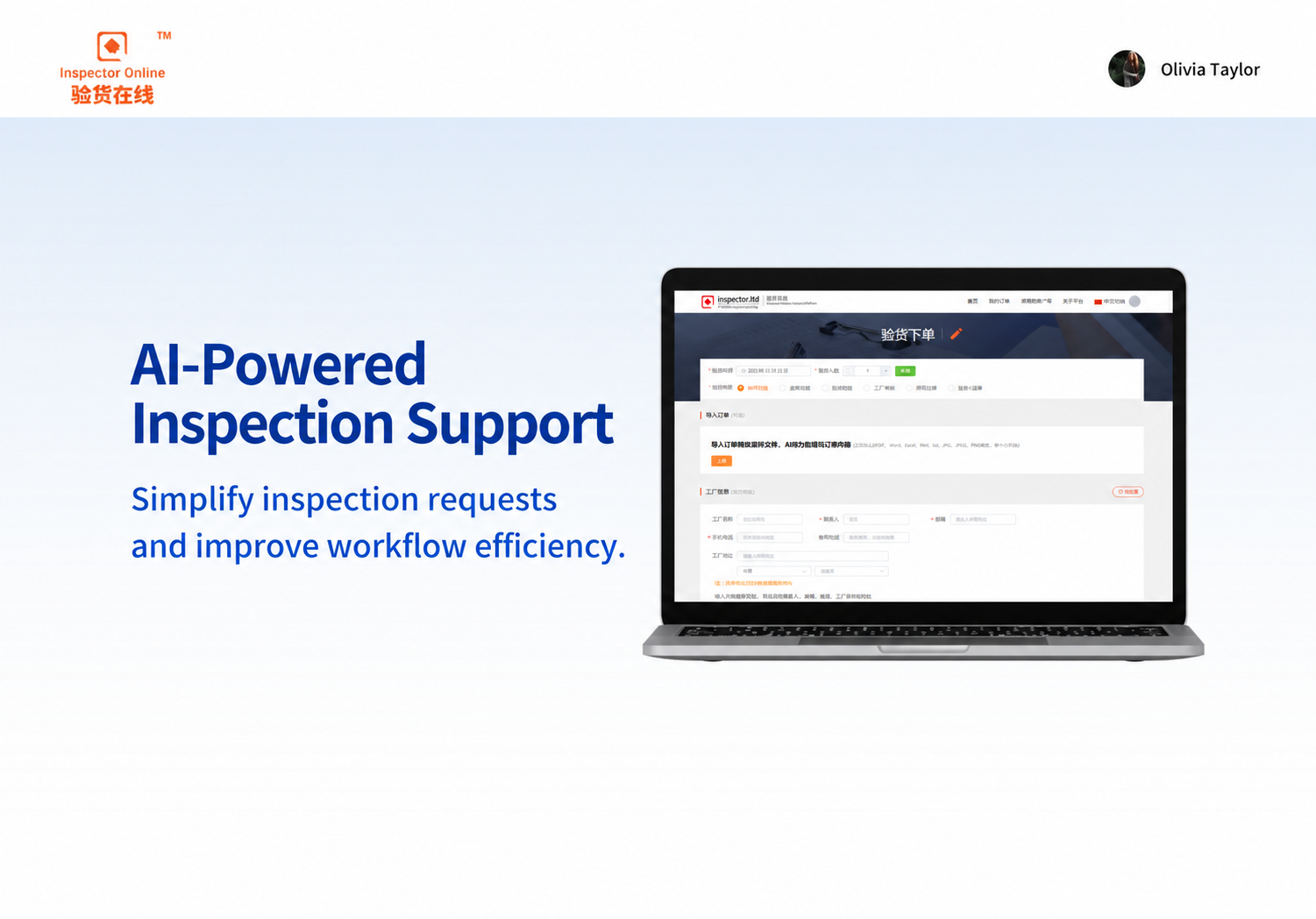
In practice, the third-party inspection will be in the sampling process, real-time filming of the sampling site, sampling location, sample extraction process, fill out the sampling records in detail, and all the retained information will be synchronized uploaded to the inspection online platform. Whether it is the sampling ratio, sampling location, or sample status, can be accessed at any time to verify, effectively avoiding the factory to “sampling irregularities”, “sample is not representative” as the reason for objection to the inspection results. This mode of full retention of evidence is also an important reflection of the impartiality of the third-party inspection, but also the core value of the digital empowerment of inspection online.

Goods inspection sampling is the “first line of defense” for quality control, and its standardization directly determines the credibility of the third-party goods inspection and also affects the stable operation of the supply chain. Third-party inspection by virtue of independent, impartial, professional sampling practices, combined with the inspection of goods online digital evidence, visual management advantages, effectively cracked the sampling process of subjectivity, arbitrariness, for both buyers and sellers to provide a reliable quality reference. Following the above practical methods can not only ensure the standardization and normalization of the sampling process, but also avoid quality risks and trade disputes to the maximum extent possible, helping enterprises to build a solid quality foundation in the global supply chain and achieve high-quality development.

 Chinese
  English