

In today’s increasingly globalized trade environment, quality control for international trade orders has become a critical factor in determining whether a company can successfully fulfill its obligations and maintain its brand reputation. For buyers located overseas or far from production facilities, third-partyinspectionServices are not only the “gatekeepers” of quality control but also a crucial means of mitigating supply chain risks. However, how do you choose a professional and reliable inspection company? What common “pitfalls” should you be wary of in practice? Drawing on industry experience, this article outlines five key points that must be addressed before shipment.
1. Timing of inspection: avoiding early or late intervention
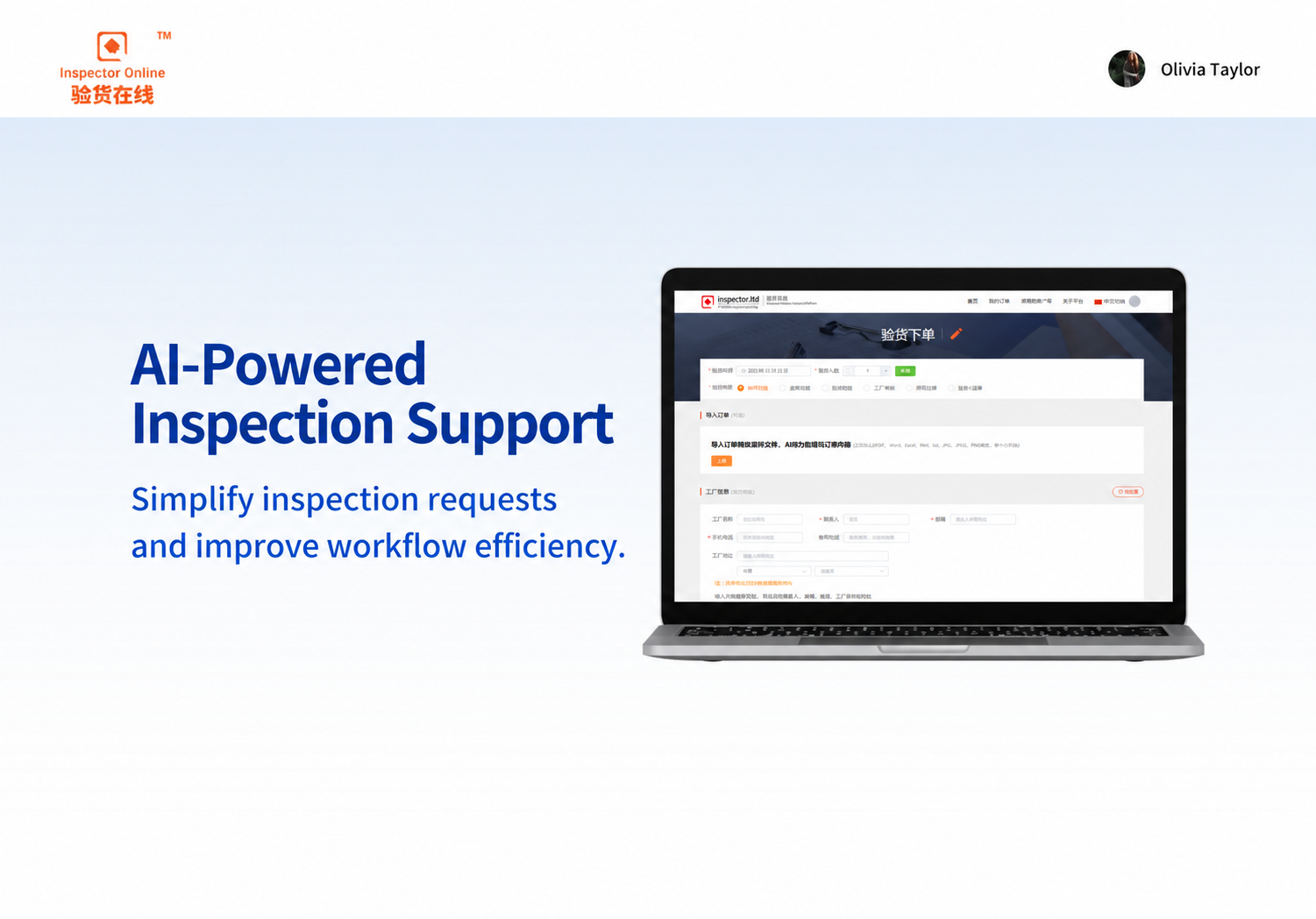
Many customers mistakenly think that the production has just started to arrange for inspection, but in fact, it is easy to cause a waste of resources. The real sampling inspection should be carried out after the production is completed 100% and the packing progress is more than 80%, in order to accurately reflect the final shipment status. If the goods inspection in advance, the subsequent production may introduce new quality problems; and miss the loading time, then lose the opportunity to rectify. Professional service organizations such asInspector OnlineInspector OnlineThe production cycle is accurately matched by an intelligent system to ensure that the inspection nodes are scientific and reasonable.

2. Inspection criteria: clarifying the basis for acceptance and preventing bias in understanding
There are often discrepancies between buyers and sellers regarding the definition of “acceptable products.” A factory may deliver goods based on “factory standards,” while the customer expects them to meet “retail market standards.” Therefore, before placing an order, specific requirements regarding appearance, functionality, safety, and other aspects must be clearly communicated and translated into actionable inspection items. The online inspection platform supports the automated generation of inspection checklists and allows customers to communicate directly with inspectors, ensuring consistent standards and eliminating information gaps.
3. Timeliness and transparency of reporting: data-driven decision-making
Traditional inspection report delivery cycle is long, affecting the shipment judgment. Now, the inspection of goods online can be done after the completion of the inspection as soon as 4 hours to deliver visualization reports, including graphic records, classification and intelligent interpretation of the problem. Compared with some of the large factories rely on manual summary, inspection online with digital processes to achieve a more rapid response to help customers make timely decisions on whether to ship.
4. Flexibility of services: autonomy from pricing to communication
Some large third-party organizations in the market use a fixed package model, making it difficult to meet individualized needs. The ideal solution should provide free pricing, self-service orders and free communication mechanisms throughout the process. Customers can set their own budgets according to product type and inspection complexity, and the platform automatically matches suitable inspectors, significantly improving efficiency and cost control.

5. Supplier qualification: controlling risk at the source
Are there issues such as overstated production capacity or a lack of quality control systems at a factory you’re working with for the first time? It’s difficult to determine this based solely on videos or photos. We recommend combining this with a factory audit service to conduct a comprehensive assessment of the factory’s production capacity, quality management processes, and compliance credentials.
Inspection of goods online recommended to the factory audit service process front, with the subsequent inspection of goods, to help customers realize the whole chain from production to shipment of wind control.
concluding remarks
Third-party inspection is not simply “sending someone to take a look”, but a specialized and systematic quality assurance project. Choose a company likeInspector OnlineSuch a service provider with technological empowerment, process transparency and rapid response can not only effectively avoid common misconceptions, but also build a solid line of defense for enterprises' global supply chain. In the highly competitive international market, an accurate cargo inspection may be the key step to win customers' trust.

 Chinese
  English