

In today's world of increasingly frequent international trade, ensuring product quality and delivery consistency has become a core concern shared by both buyers and sellers. Third-party inspectioncompanies act as independent quality control service providers, and the coverage of their service networks directly affects their ability to provide efficient and convenient support to global buyers.
For luggage, travel bags, backpacks, and other travel goods, third-party inspection should cover not only supplier locations but also workmanship, trolley handles, wheels, zippers, stitching, materials, labeling, packaging, and AQL sampling. Professional travel goods Product Inspection Services can help buyers identify common defects before shipment and determine whether the entire lot meets the buyer's requirements.
For more information on inspection standards, inspection items, and service requirements for luggage and travel bags, see our Luggage Inspection Services and Standards guide.
Third-Party Inspection and Product Testing Services for Travel Goods
For suitcases, travel bags, backpacks, and other travel goods, third-party inspection should cover not only appearance and workmanship but also functional testing, trolley handle and wheel checks, zipper and stitching inspection, material and labeling verification, packaging checks, and AQL sampling. Professional product testing services for travel goods andluggage quality control servicescan help buyers identify structural, functional, material, and packaging issues before shipment, reducing the risk of returns, rework, and customer complaints.
First, the industry norm: top inspection companies generally establish a global network
For professional third-party inspection companies serving global clients, establishing overseas offices or local service networks is often an important part of their international service strategy. Leading inspection companies typically use a localized operating model to improve service consistency, response speed, and coverage across major sourcing regions.This localized approach helps maintain consistent inspection standards and supports faster service across different sourcing markets. This approach also supports consistent service quality across regionsguide.
Service responsiveness and cost control: Having offices in major source countries (e.g. China, Vietnam, India, Bangladesh, Turkey, etc.) and in key consumer market locations significantly reduces the time it takes to dispatch inspectors to the factory. This means that when a customer sends a request for inspection, the company can dispatch the most suitable quality control engineer from the nearest location, significantly improving response efficiency and saving significant travel costs.
Deep localization operation and resource integration: Overseas branches are typically responsible for recruiting, training, and managing local inspection teams. These localized quality control personnel are not only familiar with the local language, culture, and business practices, but also have a deeper understanding of each region’s industrial clusters, industry standards, and potential risks. For example, inspectors who are well-versed in local furniture manufacturing processes or specialists familiar with specific electronic component procurement markets can provide more targeted inspection services. For products such as suitcases and travel bags, you can also refer to our Luggage Inspection Checklist, with a focus on inspecting the pull rods, wheels, zippers, stitching, materials, and AQL sampling items.
Enhanced communication and trustworthiness: Having a physical office represents a long-term commitment to that market and enhances buyers' trust. When urgent or complex quality issues arise, customers are able to communicate directly with the local management team, avoiding misunderstandings due to time differences and language barriers, and smoothing the problem-solving process.

II. Different forms of existence of global networks
Not all “overseas branches” exist as large-scale entities. Depending on the size of the company and its business strategy, its global presence takes many forms:
Large multinational inspection organization: With wholly-owned subsidiaries and large offices in dozens of countries around the world, we have established standardized global operating procedures and are able to provide multinational corporations with seamless, globally uniform quality services.
Medium-sized professional service provider: Usually set up core operation centers in the most important sourcing countries (e.g. China, Vietnam) and cover other countries by establishing long-term exclusive cooperation with reliable local service partners. This “self-operated + cooperative” model ensures service quality and extends coverage.
Flexible Partner Network: Some companies rely heavily on a strong, highly vetted and trainedNetwork of freelance surveyors. While its headquarters may be located in one country, the management system allows for the dispatch of qualified personnel from around the world to carry out tasks. This model is highly flexible, but standardization and consistency of management are key challenges.
Third, the core value to buyers: why choose a service provider with overseas branches?
Choosing a third-party inspection company with a solid presence in your country of origin provides multiple safeguards for your sourcing business:
Unrivaled Convenience: There is no need to handle complex international communications and staff scheduling on your own, the local team at the inspection company will take care of all the nitty-gritty.
The role of cultural bridges: Local inspectors are better able to communicate with factories, understand the “subtext” of the manufacturing process, and detect problems that may be hidden.
risk avoidance: Physical presence means greater control and accountability. If something goes wrong with the inspection, you have a clear local point of contact to pursue and negotiate remedies.
Comprehensive cost-effectiveness: Although there is a fee for the service, the upfront investment in inspection is a very cost-effective risky investment compared to returns, rework, loss of reputation and even order cancellations due to quality issues.
For bulk travel goods orders, a pre-shipment inspection (PSI) can combine AQL sampling, workmanship checks, functional testing, labeling, and packaging verification to help buyers confirm whether the entire lot meets requirements before the goods leave the factory.
IV. How to verify the company's global service capability?
When choosing a partner, buyers should be proactive in seeking verification:
Requesting the other party to provide itsAddresses, contact details and information on the person in charge of specific overseas officesguide.
Ask whether they use their own staff or outsourced staff in your target sourcing locations and find out about their training and management systems for staff.
Ask for a sample case report from the relevant area to get a feel for the professionalism of their service details.
A complete inspection report should record the sample size, defect classifications, on-site photos, functional test results, and final inspection decision, helping buyers make decisions on shipment approval, corrective action, or re-inspection.
Conclusion
Undoubtedly, third-party inspection companies with a truly globalized network layout have become the mainstream of the industry and synonymous with high-quality services. For buyers engaged in international trade, choosing an organization with direct branches or strong and controllable partners in the place of origin is an important strategic decision to guarantee procurement quality and control supply chain risks. When choosing a service provider, it is important to take its global landing ability as one of the core investigation factors.
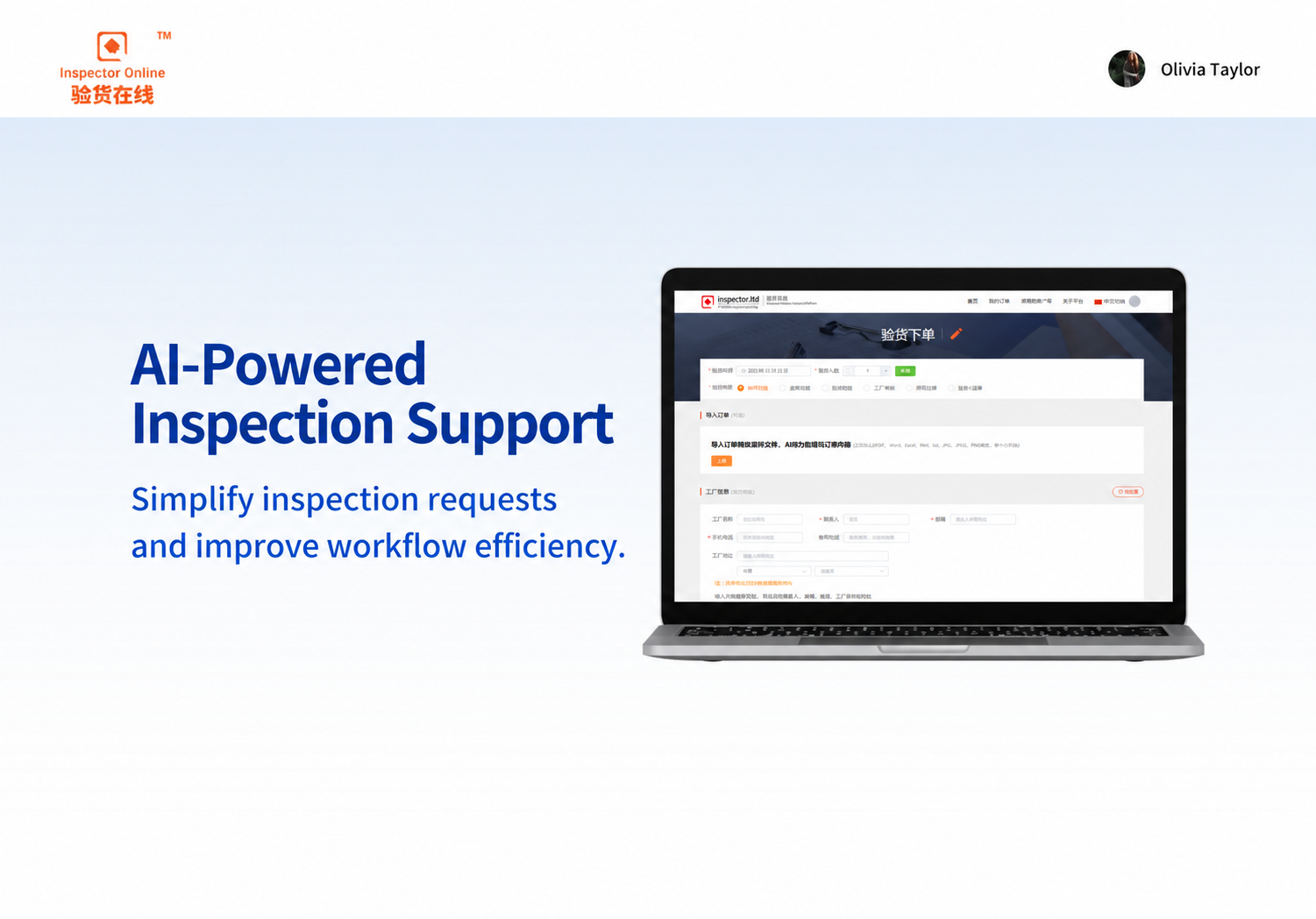
For buyers looking for a balance of cost-effective and professional services, look at similar Inspector Online These are specialized platforms. They are often able to offer standardized and flexible inspection solutions based on a strong in-house team with deep roots in the major sourcing countries, as well as a wider regional reach through an established network of partners.
If you need inspection services for luggage, travel bags, backpacks, or other travel goods, please Contact Us for an inspection plan and quote.

 Chinese
  English